

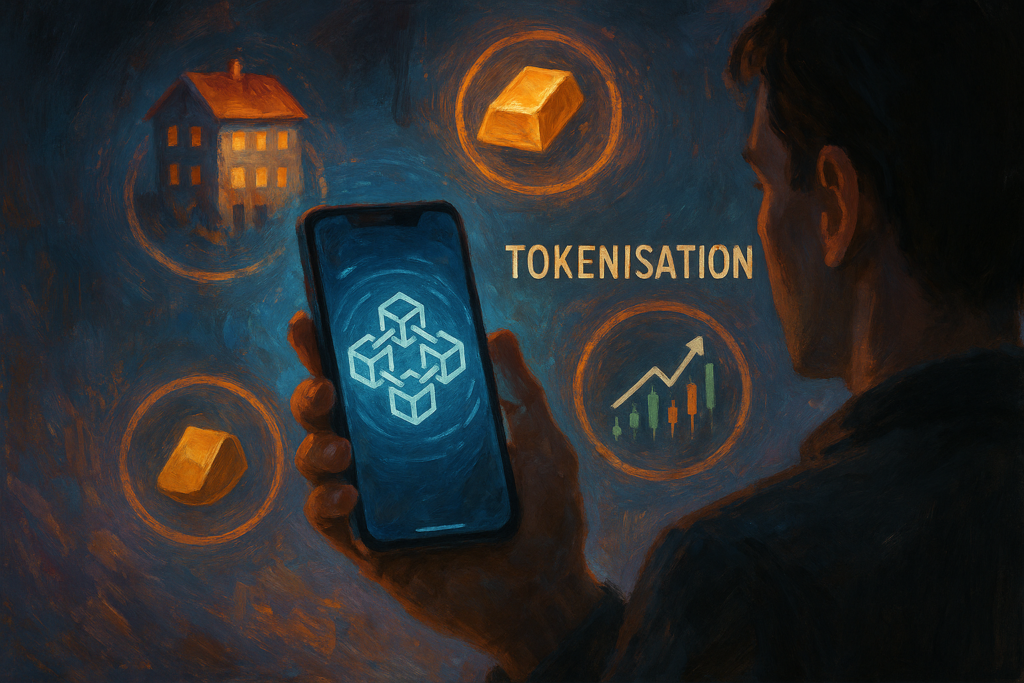
Until recently, cryptocurrency investing mostly meant buying digital currencies like Bitcoin or Ethereum. But there’s a new wave coming: tokenisation of real-world assets (RWAs). In simple terms, this means using blockchain technology to digitally represent real assets—like real estate, gold, shares, or even artwork—that have value outside the crypto world. For investors, this could be one of the biggest changes in the way we think about both crypto and traditional investments.
What Is Tokenisation of Real‑World Assets?
Tokenising a real-world asset involves creating a digital token on a blockchain that represents ownership or a share in a physical asset. These tokens can then be traded much like cryptocurrencies. It’s a way to bridge digital finance and tangible assets, combining the efficiency of blockchain with the reliability of established investment classes.
- Example: A developer owns a commercial building worth ₹10 crore. By tokenising it, the value is broken into 1 lakh digital tokens, each representing a fraction of the property. Investors can buy and trade individual tokens, gaining exposure to the building’s value and income.
How Does Tokenisation Work?
Tokenisation transforms ownership rights of a real asset into a digital token on a secure blockchain. This process involves:
- Asset Identification: Determining a physical asset that has tangible value (property, gold, etc.).
- Legal Structuring: Ensuring the token accurately represents ownership, rights, and complies with regulations.
- Issuing Tokens: Creating and issuing digital tokens on a blockchain, usually via smart contracts.
- Trading: These tokens can now be bought, sold, or transferred on secondary markets or digital platforms, bringing liquidity to otherwise illiquid assets.
Which Asset Classes Can Be Tokenised?
- Real Estate: Both commercial properties and residential units.
- Precious Metals: Gold, silver, and other metals held in vaults, represented digitally.
- Art and Collectibles: Paintings, sculptures, rare items.
- Equities and Bonds: Shares in private or public companies.
- Commodities: Oil, agricultural products, etc.
Tokenisation is limited only by the ability to define clear ownership and create robust legal frameworks around these assets.
Benefits of Tokenising Real‑World Assets
- Fractional Ownership: Investors can buy small fractions of expensive assets. For example, you don’t need crores to invest in premium real estate—you can start with a few thousand rupees.
- Improved Liquidity: Complex assets like property or fine art are usually hard to sell quickly. Tokenisation allows easy buying and selling on digital exchanges.
- Transparency: Transactions are recorded on blockchain, so investors can easily track history and ownership.
- 24/7 Accessibility: Unlike traditional markets, blockchain-based asset trading doesn’t have restricted hours.
- Reduced Costs: Blockchain automates processes, potentially lowering middleman and legal fees.
Risks and Challenges
- Regulatory Uncertainty: Many countries, including India, are yet to draft clear laws for asset tokenisation. This creates legal risk for investors and platforms.
- Asset Backing: There’s always a risk the digital token may not be properly backed by the real asset or may suffer from poor documentation.
- Technology Risks: Blockchain platforms can be exposed to hacks, smart contract bugs, or network failures.
- Market Depth: Liquidity depends on enough buyers and sellers participating, which may not always happen for niche assets.
- Fraud and Misrepresentation: Without proper due diligence, tokens may misrepresent asset ownership or rights.
Tokenisation Around the World
Globally, regulators are exploring ways to bring real asset tokenisation into mainstream finance. Major banks in the US, Singapore, and Europe have begun pilot projects for tokenised bonds and equities. In India, the RBI and SEBI are monitoring blockchain adoption and considering frameworks, though asset tokenisation is not yet fully legalised for the average retail investor (RBI). Still, Indian fintech companies are experimenting through regulatory sandboxes.
How to Participate in Tokenised Asset Investing
- Research Platforms: Look for regulated marketplaces or platforms proposing asset-backed tokens. Globally, examples include Securitize, Polymath, and tZERO. Indian options are limited, but new players may emerge as regulations evolve.
- Verify Asset Backing: Ensure the token is transparently linked to a real, audited asset. Ask for legal documentation before investing.
- Check for Regulatory Compliance: Platforms operating in India should comply with RBI and SEBI guidelines. International platforms must meet their country’s standards.
- Start Small: Consider investing a small percentage of your portfolio as tokenised assets are still new and evolving.
Do not treat tokenised assets as guaranteed or risk-free. Unlike bank products or government schemes, these investments are speculative and best suited for informed investors ready to handle risks.
Will Real‑World Asset Tokenisation Replace Traditional Investments?
It’s unlikely that tokenisation will fully replace banks, fixed deposits, or established markets soon. However, it can make hard-to-access asset classes more inclusive and efficient. The greatest value may lie in expanding opportunities instead of disrupting what already works.
Compare with Other Investment Options
Let’s briefly see how tokenised assets compare with popular investment choices:
| Asset Type | Liquidity | Minimum Investment | Transparency | Regulation |
|---|---|---|---|---|
| Tokenised Real Estate | High (depending on platform) | Very Low | Blockchain-Based | Unclear/Limited |
| Stocks | High | Low | Moderate | Strong (SEBI, Exchanges) |
| Bank FDs | Medium | Very Low | High | Very Strong (RBI) |
| Physical Gold | Low-Medium | Medium | Moderate | Standard (BIS) |
Want to Explore Other Investment Opportunities?
If you’re curious about how traditional and digital finance intersect, check out our latest guides on FinWitty’s blog for practical advice on managing your money, or use our Find My Card tool to discover the best credit cards for your lifestyle.
FAQs on Real‑World Asset Tokenisation
1. Is it legal to invest in tokenised real estate in India?
Currently, most tokenised real-estate products are not fully regulated for Indian retail investors. Always check SEBI or RBI updates before investing and prefer regulated platforms.
2. How safe is investing in tokenised gold or property?
The safety depends on the platform’s credibility, security of the blockchain, and how well the tokens are actually backed by physical assets. There is a risk if proper legal checks are not done.
3. Do I need a crypto wallet to invest in tokenised assets?
Yes, you typically need a digital wallet that supports the blockchain network where the tokens are issued. Some user-friendly platforms handle wallets and custody for investors.
4. What are the main risks in tokenised asset investing?
Risks include regulatory changes, asset misrepresentation, technology issues, and illiquidity. Diversification and due diligence are crucial before deciding to invest.
5. Can I use tokenised assets as collateral for loans?
This is possible in a few advanced crypto platforms, but rarely available in India. Traditional banks generally do not accept tokenised assets as collateral yet.
For more straightforward ways to grow your wealth—explore FinWitty’s blog for tips, or try our card finder to compare credit cards and get the right credit card benefits for you!