

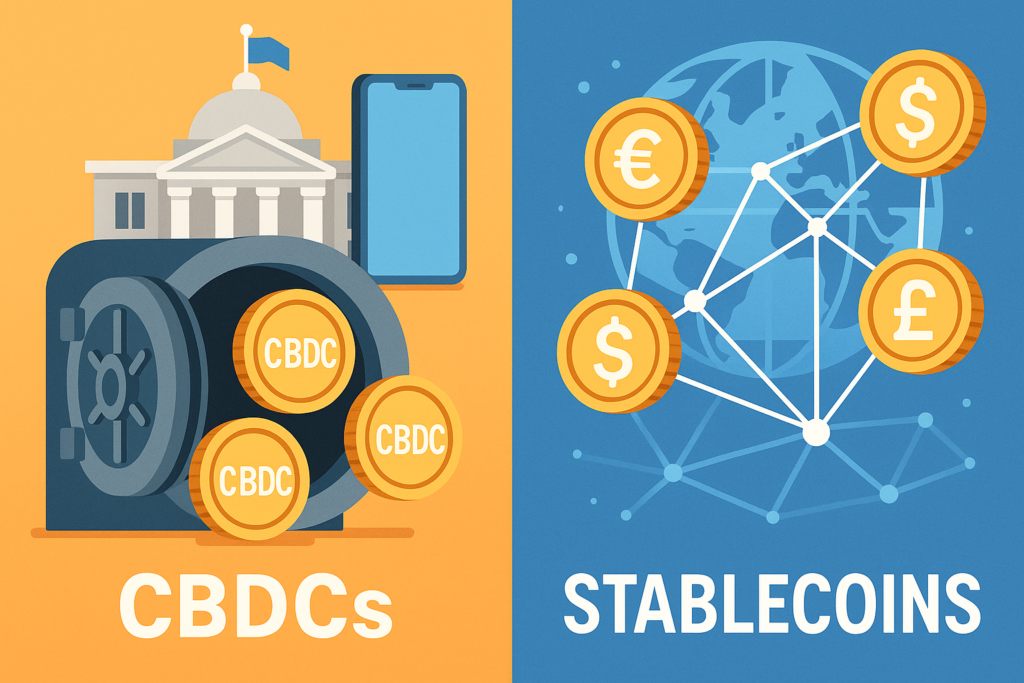
Digital money is no longer science fiction—it’s starting to change how we pay, save, and do business every day. Two types of digital currencies frequently make headlines: Central Bank Digital Currencies (CBDCs) and stablecoins. They sound similar, but their origins, structures, and use cases are quite different—and understanding those differences is becoming more important as India and the world move toward a cash-lite, tech-driven future.
What Are CBDCs?
CBDC stands for Central Bank Digital Currency. It’s a digital form of national currency issued directly by a country’s central bank, like the Reserve Bank of India (RBI) or the Federal Reserve in the US. Unlike cryptocurrencies such as Bitcoin, a CBDC is centrally controlled. It aims to offer the same stability and trust as cash, but in a digital format you can use with a smartphone or online.
Key Features of CBDCs
- Issued by the central bank: CBDCs are official currency and a liability of the central bank.
- Legal tender: You can use CBDCs for paying taxes and settling all public and private debts—just like paper rupees or dollars.
- Regulated: All transactions are under government oversight. Rules about privacy and anti-money laundering apply.
- Can use existing payment infrastructure: Central banks can build CBDCs to work seamlessly with banking apps and payment networks.
The RBI launched a pilot of the Digital Rupee (e‑INR) to test use cases for retail and wholesale payments, making India a key player in the CBDC exploration.
What Are Stablecoins?
Stablecoins are privately issued digital tokens pegged to a stable asset, usually a major currency like the US dollar, euro, or sometimes commodities like gold. The most well-known examples are USDT (Tether) and USDC (USD Coin). Stablecoins are not legal tender but aim to keep their value steady and avoid the wild swings seen in cryptocurrencies like Bitcoin or Ethereum.
Key Features of Stablecoins
- Privately issued: Companies or organizations create and manage stablecoins, not government bodies.
- Pegged to assets: Most are backed 1:1 by currency in a bank account, government bonds, or other low-risk assets.
- Global and borderless: Easily transferable across countries, typically via blockchain networks.
- Not legal tender: You can’t pay taxes or debts with them directly—acceptance depends on the user and service provider.
Unlike CBDCs, stablecoins operate in the cryptocurrency ecosystem and facilitate quick transfers, especially for international payments and decentralized finance (DeFi) applications.
CBDCs vs. Stablecoins: A Quick Comparison
| Feature | CBDCs | Stablecoins |
|---|---|---|
| Issuer | Central Bank | Private company or DAO |
| Legal Tender | Yes | No |
| Pegged Value | National Currency | Currency, commodity, or algorithmic |
| Backed By | Central bank reserves | Banks, collateral, or code |
| Regulation | Government-regulated | Varies by country—less oversight |
| Transparency | High—official statistics | Depends on issuer |
Why Do CBDCs Exist?
CBDCs are designed to bring the safety, stability, and backing of the central bank into the digital world. They could:
- Improve payment efficiency—money transfers can happen instantly with fewer intermediaries.
- Promote financial inclusion—making digital payments accessible for everyone, even those without a bank account.
- Reduce risks associated with privately issued digital currencies (like fraud and volatility).
- Offer a robust, government-backed alternative to cash as societies move toward digital payments.
In India, the RBI sees CBDCs as a way to strengthen the digital economy while preserving trust in the financial system.
Why Do Stablecoins Matter?
Stablecoins emerged as a solution to the volatility of cryptocurrencies. Their main advantages:
- Serve as a bridge between traditional money and decentralized finance (DeFi).
- Allow instant, low-cost global payments—even outside banking hours.
- Useful for remittances, peer-to-peer transactions, and as ‘digital cash’ in crypto trading platforms.
- Often support programmable money in blockchain projects: payments can be automated with smart contracts.
For those actively trading crypto or building blockchain applications, stablecoins enable quick moves in and out of the system without major price swings.
Pros and Cons: CBDCs
- Pros
- Government-backed and stable.
- Can reduce costs and delays in banking and payment systems.
- Stricter fraud prevention and risk controls.
- Cons
- Can raise privacy concerns—central banks could, in theory, monitor all transactions.
- May compete with bank deposits, impacting banks’ ability to lend.
- Rollout and adoption may take time, as infrastructure needs to be developed at scale.
Pros and Cons: Stablecoins
- Pros
- Fast, global transactions—24×7.
- Useful for cross-border payments and trading.
- Variety of options to suit different needs (fiat-backed, crypto-collateralized, algorithmic).
- Cons
- Counterparty risk: if the issuer doesn’t genuinely hold enough reserves, the stablecoin could lose value or fail.
- Less regulation and oversight, exposing users to fraud, hacks, or mismanagement.
- Some stablecoins (especially algorithmic ones) have failed or lost their peg in the past.
Where Does Each Fit?
CBDCs and stablecoins aren’t rivals—they solve different problems:
- CBDCs are designed for mainstream payments, government transfers, and as a digital extension of national currency. They encourage safe, cashless transactions for citizens and businesses under government oversight.
- Stablecoins fill a gap in the existing financial system, supporting innovation in crypto, blockchain, and global payments. They appeal to those keen on decentralized apps, quick settlements between countries, or avoiding currency volatility.
As an Indian consumer, you may soon see both in action: using a CBDC for day-to-day transactions, while stablecoins remain an option within crypto exchanges or for money transfers abroad.
FAQs on CBDCs and Stablecoins
1. Are CBDCs and stablecoins safe to use?
CBDCs are as safe as regular cash, since they’re central bank liabilities. Stablecoins’ safety depends on how well they’re managed—look for regular audits and clear backing.
2. Can I invest in CBDCs or stablecoins?
You won’t “invest” in CBDCs—they’re just digital rupees or dollars. Stablecoins shouldn’t be investment vehicles either, but a few may offer modest yield for holding.
3. What is the biggest risk with stablecoins?
Counterparty risk: If the company managing the coin fails, or doesn’t properly back the tokens, you can lose value. Regulatory uncertainty is another risk.
4. How do I use CBDCs?
Once fully launched, you’ll be able to use the RBI’s digital rupee through authorized mobile apps, banks, or payment networks.
5. Do CBDCs help with financial inclusion?
Yes. CBDCs can reach people who don’t have traditional bank accounts, since transactions can be made with only a smartphone and identity authentication.
Where to Learn More and Take Action
The world of digital currencies is evolving fast. Whether you’re curious about safe ways to pay, want to understand which credit card fits your lifestyle, or want to stay updated on trends in digital payments, FinWitty’s blog covers what you need to know. Explore your options confidently—and don’t hesitate to check our guides for the best zero annual fee cards or the latest money-saving offers.
Ready to make smarter financial decisions, or have questions about digital currency? Visit FinWitty.com for more advice and up-to-date expert tips.