

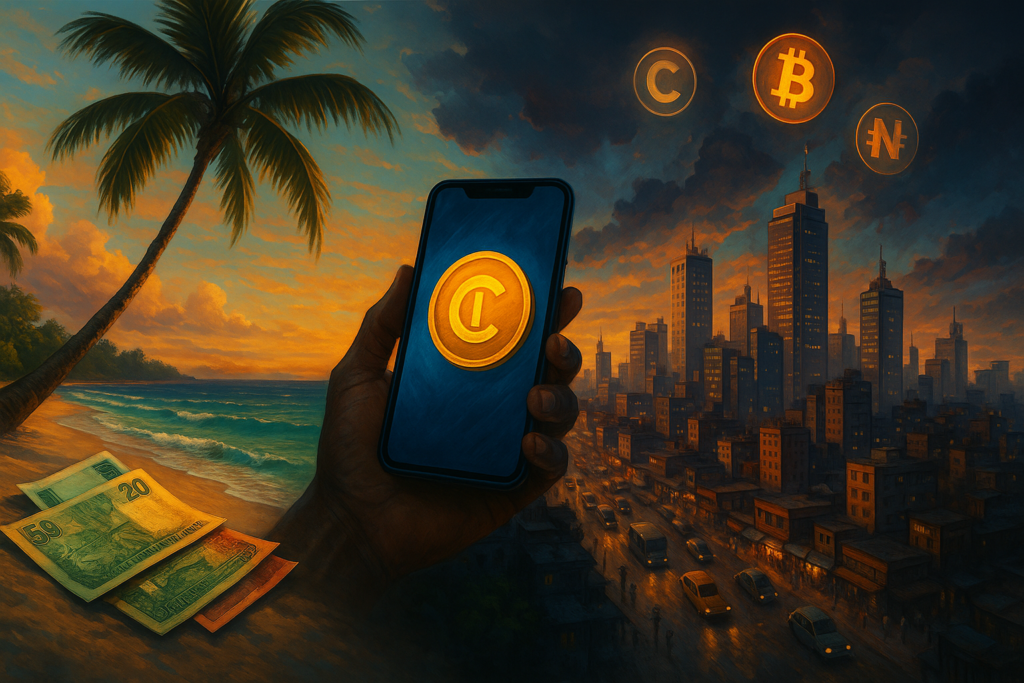
Central Bank Digital Currencies (CBDCs) are moving quickly from theory to practice. In the last few years, countries like the Bahamas and Nigeria have taken bold steps by launching the world’s first national digital currencies. The way these launches played out—what worked, what didn’t, and what’s still unclear—carries lessons for other nations and anyone interested in the future of digital money.
Understanding CBDCs: What Are They?
CBDCs are digital forms of a country’s official currency, issued and regulated by its central bank. Unlike cryptocurrencies such as Bitcoin, CBDCs are centrally controlled and carry the full backing of the country’s government. The aim is to provide citizens and businesses with a secure, accessible digital payment method and to keep national currencies competitive in an increasingly digital global economy.
The Bahamas: Pioneering the Sand Dollar
In October 2020, the Bahamas became the first nation to launch a CBDC: the Sand Dollar. This digital Bahamian dollar is available to residents via authorized financial institutions. People can transact, pay bills, and receive money through a mobile wallet right from their phones.
- Objective: Improve access to financial services for remote island communities where traditional banks have limited reach.
- Implementation: Sand Dollar wallets require only basic identification for low-value accounts, making it accessible even to those without formal banking relationships.
- Key Features: Instant transfers, tight privacy protection, and integration with existing payment systems.
What Went Well
- Simple onboarding drew interest among the unbanked and underbanked populations.
- Interoperability with mobile phones and payment service providers enabled rapid rollout.
- The Sand Dollar was positioned as an addition to, not a replacement for, cash—reducing resistance.
Challenges
- Convincing users to trust and adopt the new system. Old habits, especially dependence on physical cash, proved hard to break.
- Merchant network growth lagged behind user sign-ups. Without widespread acceptance, everyday use remained limited.
- Education on digital security and wallet management was needed, especially for older citizens.
Nigeria: The eNaira Experiment
Nigeria launched the eNaira in October 2021, becoming the first African nation and the second globally to roll out a CBDC. Nigeria faces unique challenges: a large unbanked population, heavy cash reliance, and a fast-growing digital economy.
- Objective: Enhance financial inclusion, streamline remittances, and make government benefit payments more efficient.
- Approach: Rolled out via a layered wallet system, eNaira sets user limits: basic, medium, and premium accounts each require increasing levels of identity verification.
- Integration: Linked with existing bank infrastructure, encouraging banks to participate rather than seeing CBDCs as competition.
What Worked
- Fast onboarding for banked and some unbanked populations via mobile app and USSD codes.
- Direct government-to-person payments through eNaira, such as COVID-19 relief, set an example for efficient public disbursement.
- Active campaigns by the Central Bank of Nigeria (CBN) to increase public awareness.
Stumbling Blocks
- Initial uptake was slower than anticipated, partly due to limited features in the eNaira app and low merchant acceptance.
- Digital literacy barriers and skepticism about privacy and government tracking impacted adoption.
- Widespread mobile money and fintech alternatives (already strong in Nigeria) meant the eNaira had to compete for attention.
Comparing the Approaches: Common Themes & Contrasts
| Feature | Sand Dollar (Bahamas) | eNaira (Nigeria) |
|---|---|---|
| Launch Date | Oct 2020 | Oct 2021 |
| Main Goal | Financial access in remote areas | Financial inclusion & government payments |
| Onboarding | Basic ID, phone wallet | Tiered – app, USSD, bank sync |
| Merchant Acceptance | Growing but limited | Growing, with more government incentives |
| Integration with Banks | Independent, with support of banks | Deeply integrated with existing banks |
| Key Issue | User adoption | Merchant & user engagement |
What Can Other Countries Learn?
- Financial Literacy Matters: Success depends on educating users about digital payments, how to secure their money, and the benefits of CBDCs. Both countries found that word-of-mouth, local partnerships, and helping real people with real needs mattered most.
- CBDCs Work Best Alongside Cash: A sudden digital-only shift can leave vulnerable groups behind. Allowing both digital and cash payments gives users more control and eases adoption.
- Build a Strong Merchant Network: Customer adoption stagnates without places to spend CBDCs. Incentives and simple point-of-sale tools help boost merchant participation.
- Layered Security & Privacy: Building in strong privacy features and letting users start with basic accounts (then upgrade) lowers barriers to entry, especially for those without traditional bank IDs.
- Incentivize Use, Don’t Force It: When CBDCs are required for specific government transfers or benefits, adoption rises. But broad, voluntary adoption takes longer and needs patience and trust-building.
How CBDCs Could Change Everyday Finance
Real-life CBDC use could mean easier remittance payments, minimal transaction fees, and safer digital wallets for informal economies. It can help governments target subsidies and disaster relief more transparently. In places with banking deserts, a digital currency can bring savings and payments to anyone with a mobile phone. For those considering digital-first credit cards and online banking, CBDCs might complement familiar tools in the near future.
What About India’s Digital Rupee?
The Reserve Bank of India (RBI) has started pilots for a digital rupee, learning from early adopters. Looking at the Bahamas and Nigeria, India and other countries can prepare for challenges around education, interoperability, and trust.
FAQs About CBDC Launches
1. Are CBDCs safer than regular cash or payment apps?
CBDCs are backed by the central bank, making them as safe as cash in terms of value. Security depends on wallet technology and user practices. Unlike some payment apps, CBDC balances don’t rely on a private company’s solvency.
2. If I travel internationally, can I use another country’s CBDC?
Right now, CBDCs are largely domestic. International CBDC payments are being explored through partnerships, but using a foreign CBDC abroad is not yet an option.
3. How do CBDCs affect my privacy?
CBDCs can be designed for strong privacy, but each country’s approach is different. Early models use tiered KYC and limited data sharing, though concerns about surveillance exist. It’s crucial to read your central bank’s privacy policies.
4. Can CBDCs help those without bank accounts?
Yes, that is one of their main goals. Both in the Bahamas and Nigeria, simple onboarding with minimal ID let unbanked people join the digital economy with just a phone.
5. Will CBDCs replace payment apps or cards?
Not immediately. Apps, cards, and cash will likely coexist with CBDCs, at least for the near future. Over time, CBDCs might integrate with familiar tools or underpin new ones.
For more insight into how digital payments and cards are evolving, check our guides on zero annual fee credit cards and the latest money-saving strategies at FinWitty.
Ready to Take Control of Your Digital Finances?
CBDCs are only one part of the changing financial landscape. Whether you’re looking for smart payment tools or want to understand new technologies like digital currencies, FinWitty.com can help you make sense of it all. Explore our Find My Card tool or browse our latest posts for practical financial tips.